Taking the 'woo woo' out of Inner-child work.
Why it can help to adapt the language we use.
For some people, 'inner child' can immediately make sense. For others, it can sound vague, mystical or even a little… well, woo-woo.
And honestly? I understand why.
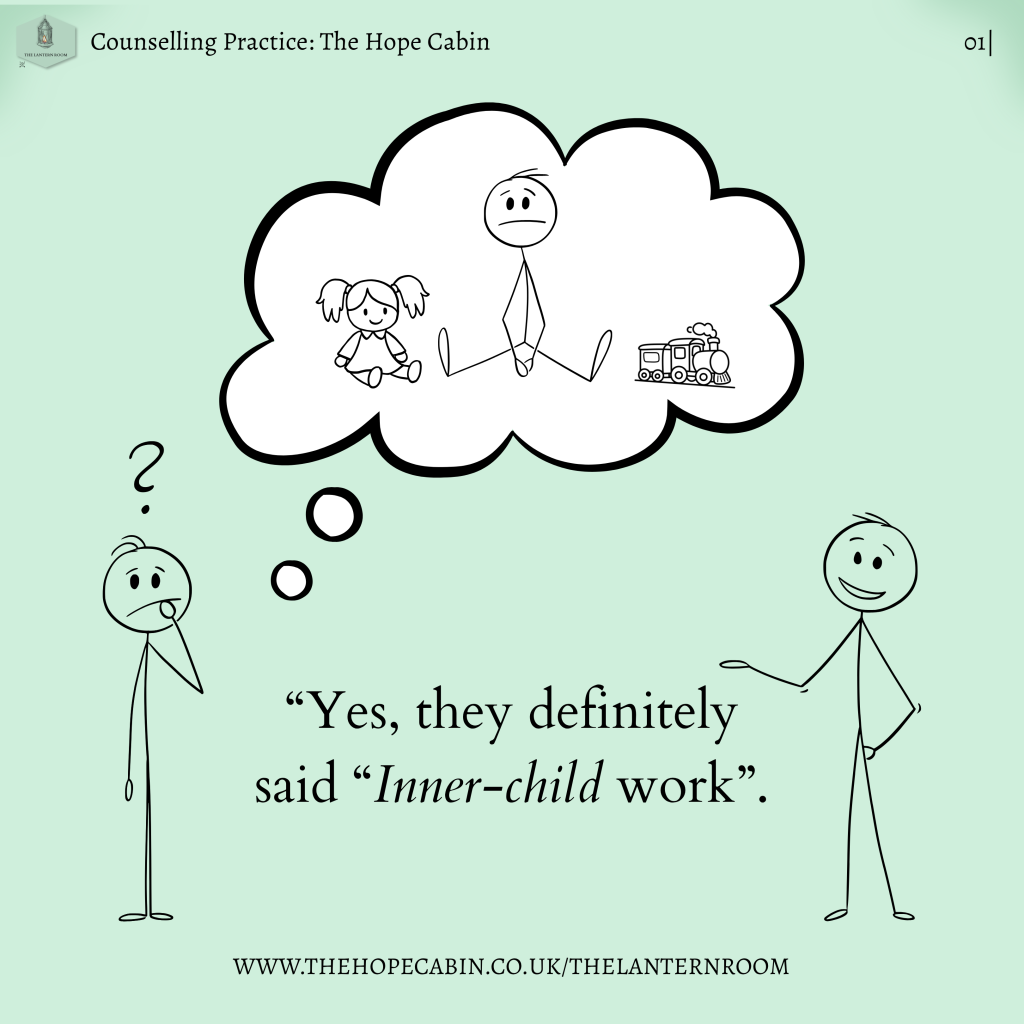
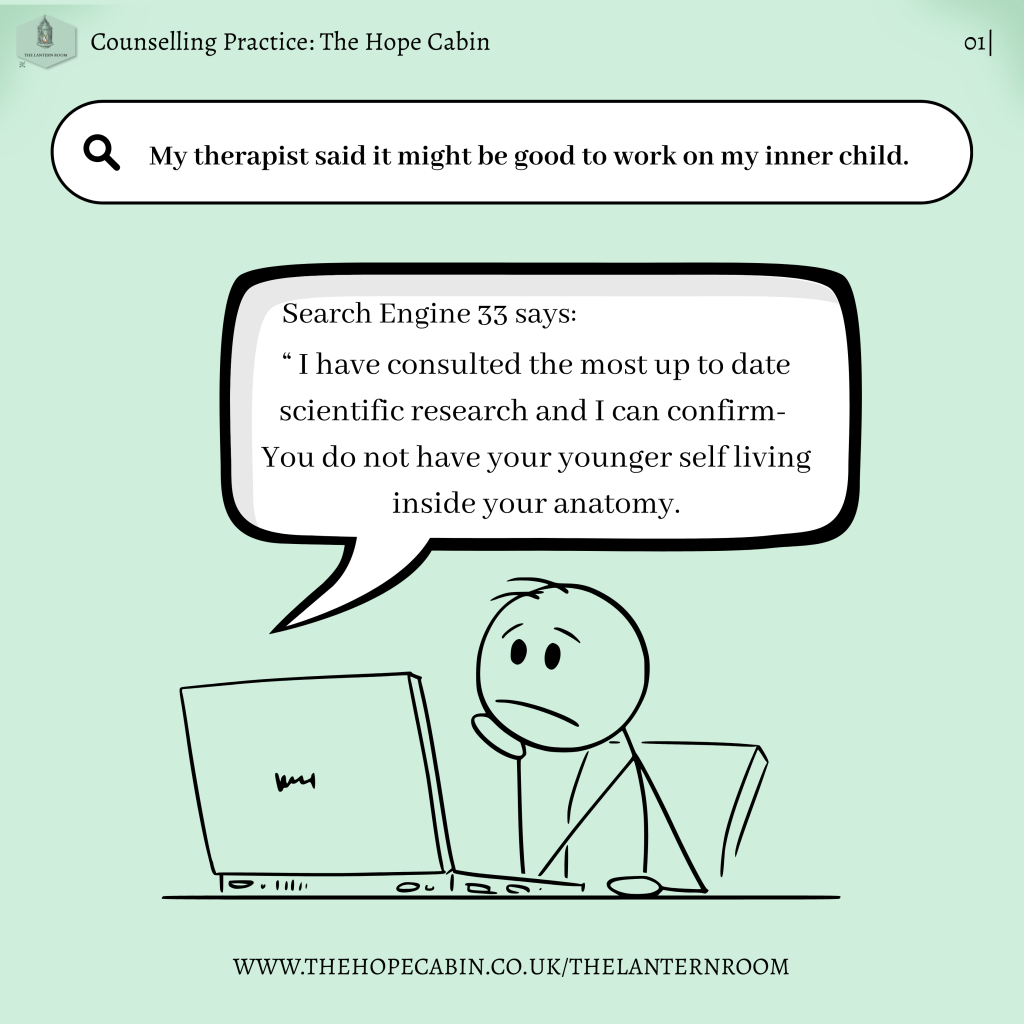
You might go home and say "My therapist said it might help to do some inner-child work...".
So naturally, you might search for it.
Then somewhere between 'healing your inner-child, childhood photographs, reparenting and viral videos of people role playing as their childhood self, you may wonder:
"What exactly did I sign up for?"
The interesting part is that none of these approaches need to be 'right or wrong'. They might be different ways people have chosen to explore their own meaning of the term.
For the purpose of this article though, I want to focus on why changing the language or description when explaining the work to clients may move barriers and mean people can engage in a way that feels better individually.
I was trained using the language of “inner-child work”, and I may still use the term where it feels appropriate for the client. But over time, I have learned that the language we use to describe this can be important.
We don’t all hear a phrase and understand it in the same way.
A phrase that feels meaningful to one person might feel confusing, uncomfortable or simply not fit for someone else.
So I might use the phrase “inner-child” with one person, while with another I might talk about early experiences, learned beliefs, attachment, protective patterns or emotional responses.
Changing the language doesn’t mean I have to change the work.
What do I mean by 'Inner-child'?
The term “inner child” isn’t a clinical diagnosis or a single standardised therapeutic intervention.
For me, it is a piece of therapeutic language.
It can be a way of looking at an accumulation of experiences, emotions, beliefs, needs and patterns that may have developed earlier in life and may still influence how we experience ourselves and the world around us.
There are different theories and therapeutic tools that can support this type of exploration and they can each give us a different way of understanding ourselves.
I've put together some of the most common frameworks that I use in my practice, with a little about each and some research connected to them.
Adverse Childhood Experiences (ACEs)
You may have heard the term ACEs, meaning Adverse Childhood Experiences.
ACEs refer to potentially traumatic experiences during childhood, including experiences such as abuse, neglect, witnessing violence and difficulties within the household or wider environment.
Research has found associations between childhood adversity and later health, wellbeing and life opportunities.
Being aware of our ACE's can help us create awareness and an understanding that some of the things we struggle with can have history going back to childhood.
Exploring ACEs in sessions can be about understanding someone's experiences within the wider story of their life and meeting it with curiosity.
For example:
What happened to me?
How did it feel?
What did I learn from it?
How might that learning be showing up in my life now?
A link to ACEs video from Public Health Network Cymru
Attachment Theory
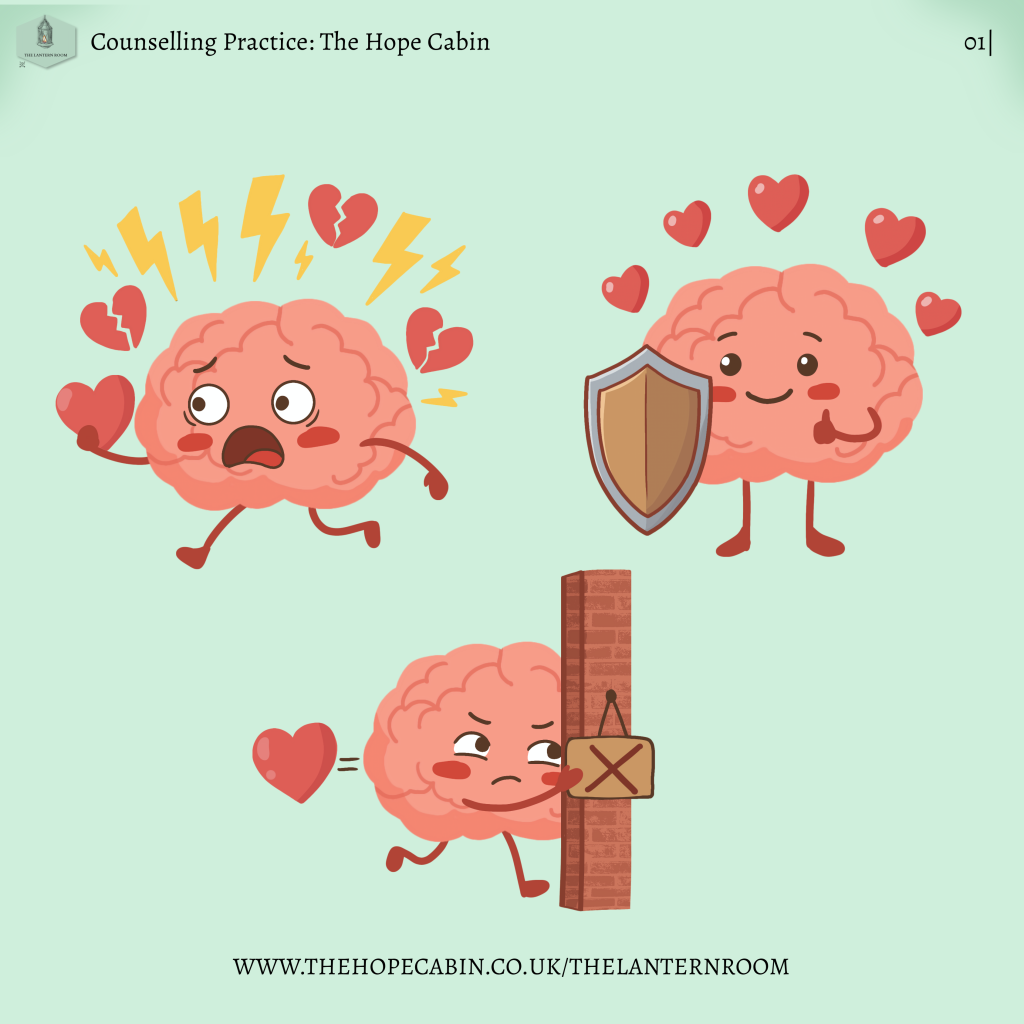
Attachment theory gives us another way of understanding how our early relationships may have influenced the way we experience ourselves, other people and relationships.
Our early experiences can teach us things about trust, closeness, needs, emotions and what we can expect from other people. Sometimes through experiences of safety and connection, and sometimes through experiences of inconsistency, rejection, absence or difficulty.
Exploring this in counselling can help us become curious about some of the patterns we may have developed as a results.
What did I learn about relationships?
What did I learn about myself?
How might these learned beliefs be showing up now?
Attachment research is much more nuanced and though it shows our attachment styles can be relatively stable, they are not fixed. Our experiences, relationships and circumstances can influence how secure or insecure we feel over time.
My approach to exploring attachment is reflective- not to label or diagnose. They can give clients a starting point for exploring what relationships and connection may mean to them.
Learned Beliefs
Children are constantly making sense of the world.
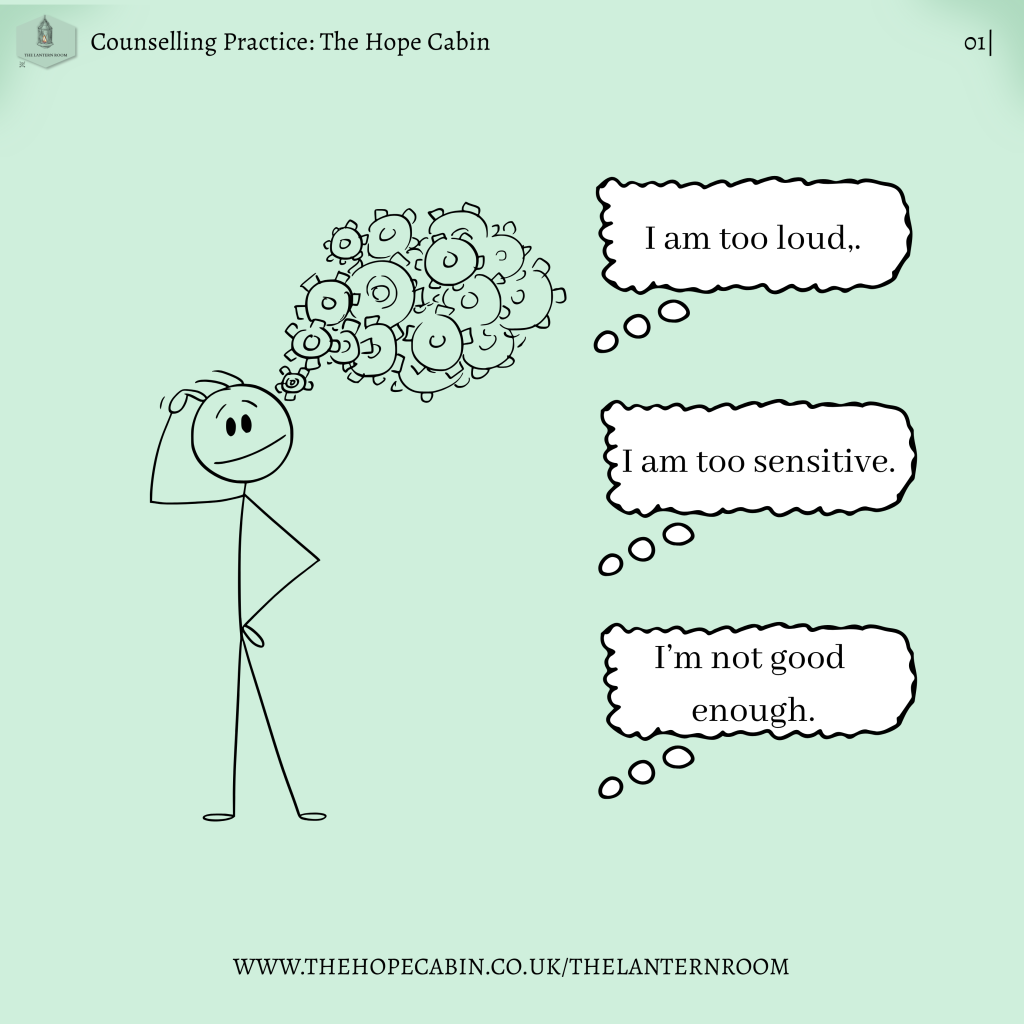
Our experiences can influence the beliefs and expectations we develop about ourselves, other people and the world around us. These can become so familiar that we may stop noticing them- they may simply feel like truth.
Imagine a child repeatedly hearing:
“You're too sensitive.”
“Stop making such a fuss.”
“You're not good enough.”
“Don't be difficult.”
“You should be able to do this.”
Over time, messages like these can contribute to beliefs about ourselves.
I'm too much.
My feelings are a problem.
I have to get things right.
I shouldn't need other people.
I have to keep everyone happy.
Repeated experiences and messages can become part of the way we learn to understand ourselves.
Patterns (or Schemas)
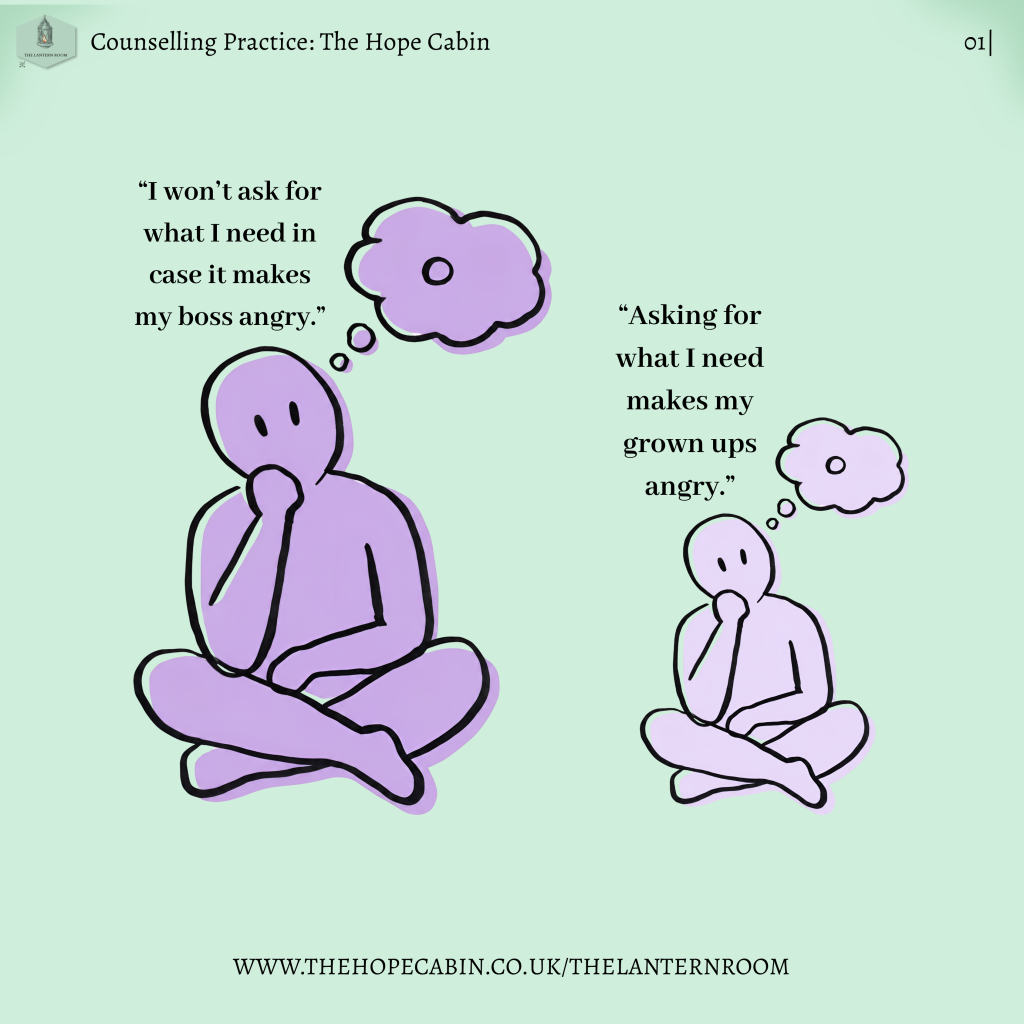
This is where the language of patterns can be useful.
In psychology, schemas can be thought of as enduring patterns or frameworks through which we interpret ourselves, other people and the world. For me, I describe these within my approach as patterns.
Research has found associations between childhood adversity and patterns such as emotional deprivation, vulnerability, social isolation and feelings of failure in adulthood.
These patterns can influence the way we interpret experiences and relationships in the present. For example, if we learned early on that our needs were too much, we might find ourselves automatically minimising those needs as an adult.
In counselling we might be able to stay curious about these patterns and explore:
"Is this something I chose, or something I learned?"
"Where might this pattern of come from?"
"Does this pattern still serve me now?"
Protective Adaptations
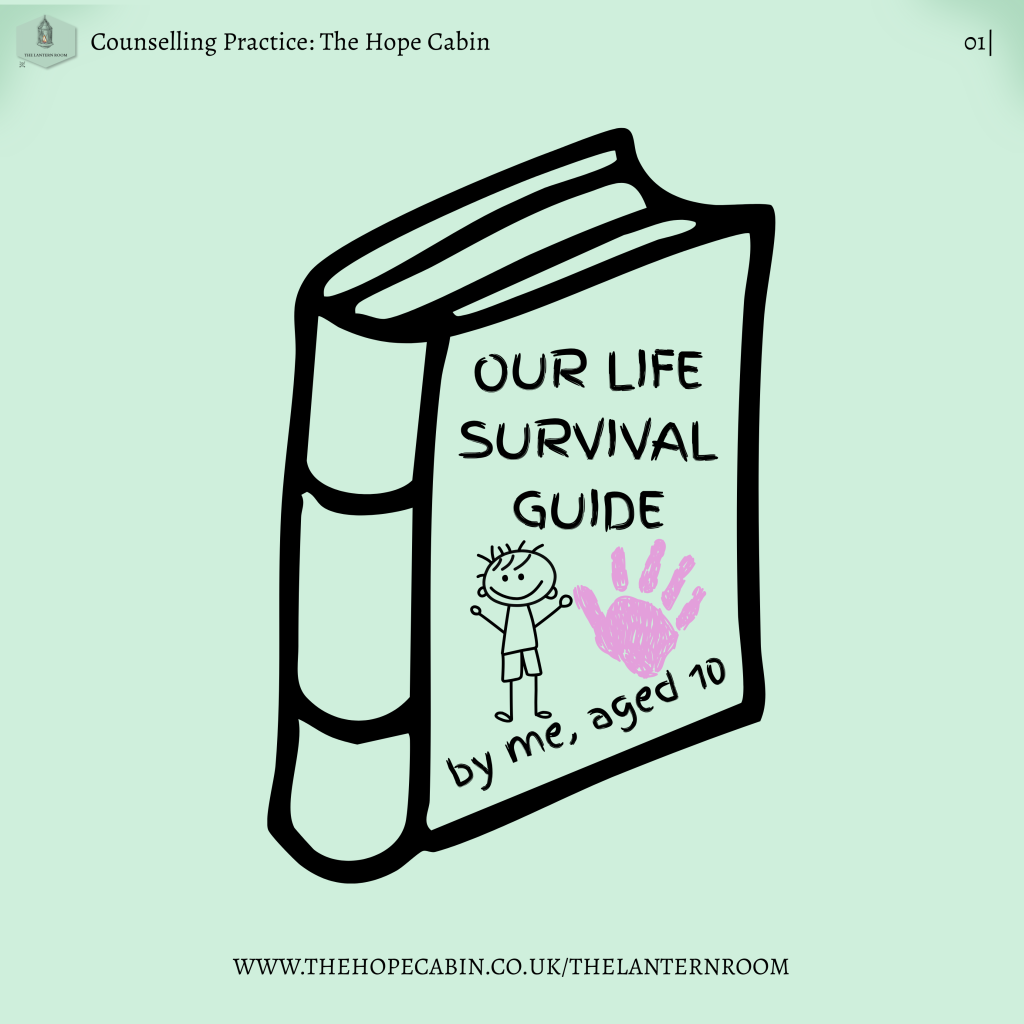
This is one of the parts of this work that I find particularly important.
Sometimes we look at something we do now and ask:
“What's wrong with me?”
What if we became curious instead?
“I wonder what happened that made this response necessary?”
Perhaps someone learned to hide their emotions because expressing them didn't feel welcomed or understood.
Perhaps they became highly alert to changes in other people's moods.
Perhaps perfectionism helped them avoid criticism.
Perhaps people-pleasing helped them maintain connection.
Perhaps they learned to cope alone because asking for help didn't feel worthwhile.
Human beings adapt to all sorts of environments.
And a response that once helped us manage something can sometimes become less helpful when our circumstances change.
The question doesn't have to be:
“How do I get rid of this part of myself?”
It might be:
“What was this response trying to do for me?”
Transactional Analysis or TA
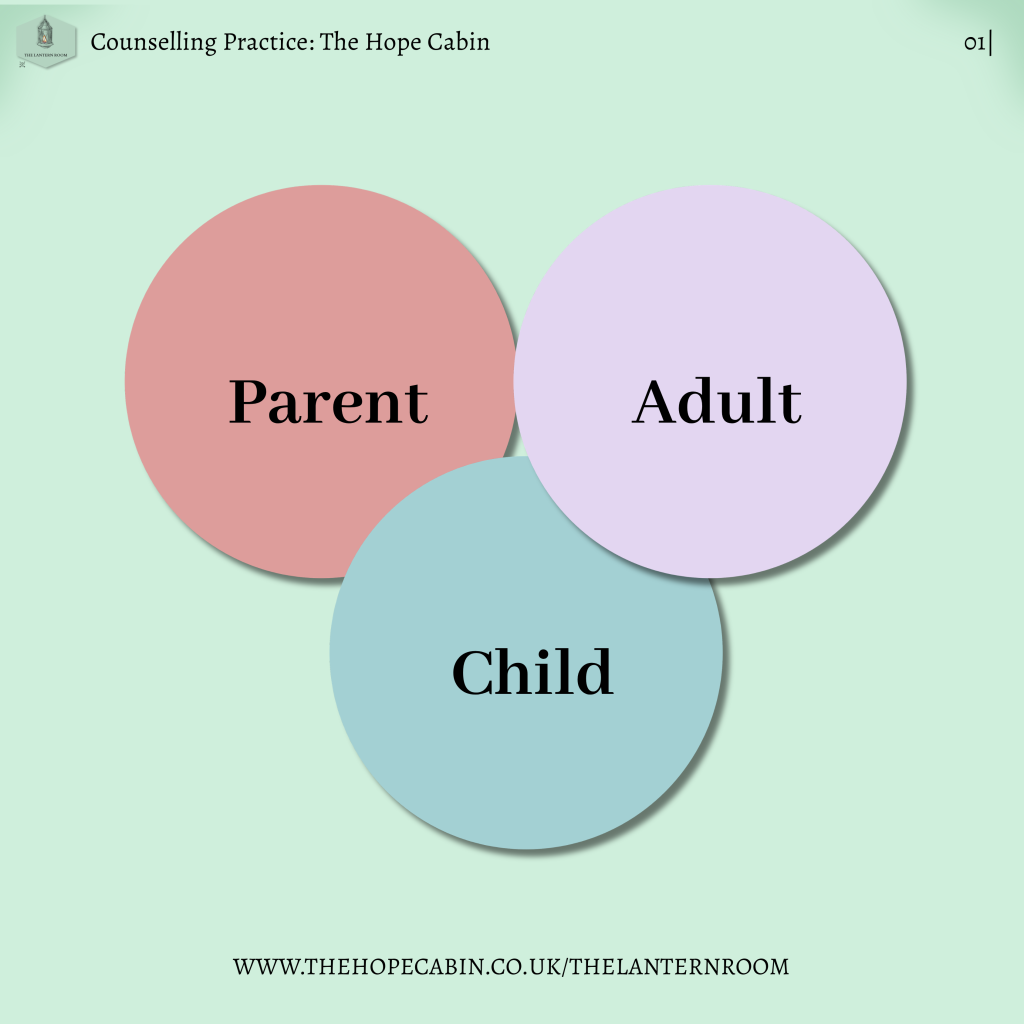
TA gives us another framework for considering the different ways we experience interactions.
It describes 3 states in which we may respond to an interaction- parent, adult and child.
The child state can be particularly relevant when exploring childhood. It can help us explore how earlier experiences and responses may show up in our interactions and which part of us is responding in the moment.
The Inner Critic
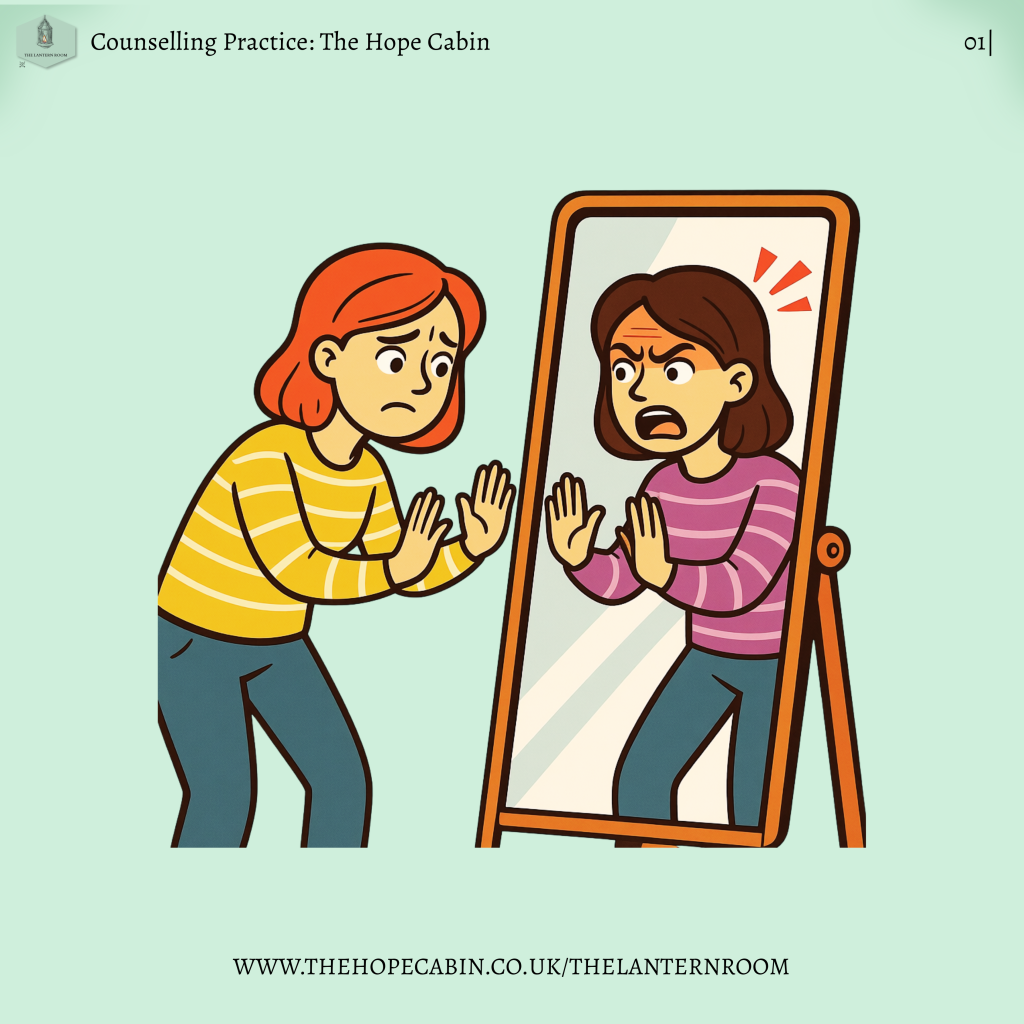
That voice in your head that says:
"You should have done better."
"What were you thinking?"
"Everyone else can manage this."
"You're being ridiculous."
"You should be further ahead by now."
Self-criticism is a well-established area of psychological research and has been described as a process that can cut across different mental health difficulties.
So when someone talks about having a particularly harsh “inner voice”, we don't need to imagine a tiny critic living inside their head.
We can explore self-criticism.
Where did those standards come from?
What happens when you make a mistake?
What do you say to yourself when something goes wrong?
Would you speak to someone else in the same way?
And what might it feel like to respond to yourself differently?
The Hidden Parts
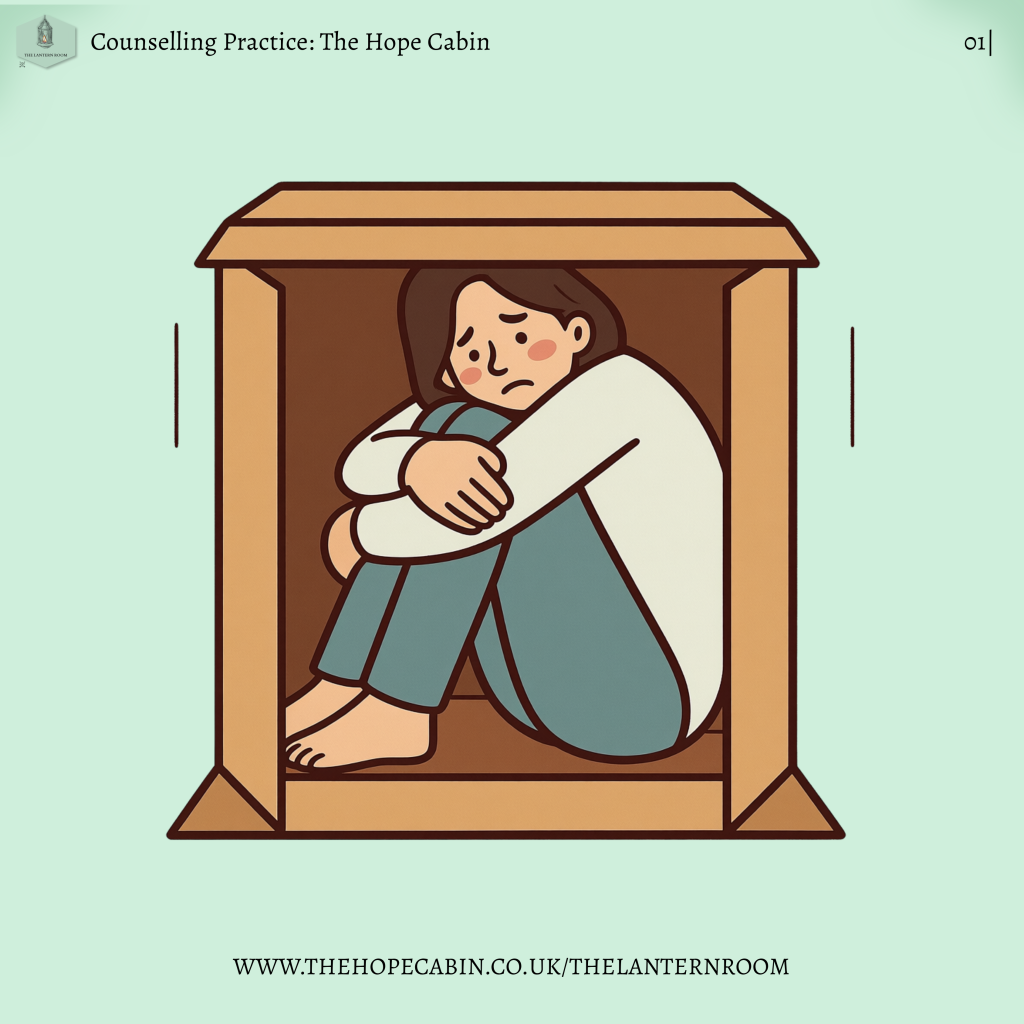
What about the parts of ourselves we learned to put away?
Childhood can also be time when we discover what we enjoy, and simultaneously be a time where we learned to put those parts away.
What makes us laugh or captures our attention?
What makes us curious or makes us feel alive?
And sometimes, parts of that expression can become quieter.
Imagine a child who loves watching films.
Perhaps they repeatedly hear that watching films is lazy or “rotting your brain”.
They may eventually learn to tuck that interest away.
Or imagine someone who loves singing, but is told
“Maybe stick to singing in the shower.”
Perhaps they become quieter about singing.
A child who loves drawing might hear that art isn't practical.
A child who asks endless questions might be told they're annoying or talking too much.
A child who loves dressing up and imaginary play might be told to grow up.
A child who is affectionate might have that affection rejected or mocked.
None of these examples automatically means that lasting harm will occur, but repeated messages can leave us wondering:
What am I allowed to enjoy?
How much of myself is acceptable?
Which parts of me should I hide?
Sometimes we don't lose these parts of ourselves completely.
Sometimes we simply learn to put them away.
And perhaps reconnecting with ourselves isn't always about finding something new.
Sometimes it is about giving ourselves permission to return to something we were taught to leave behind.
Maybe that means a film night.
Joining a choir.
Picking up a sketchbook.
Dancing in the kitchen.
Making something just because you enjoy it.
Doing something badly because you don't have to be good at it.
Who were you before you learned who you were supposed to be?
When The Past Meets The Present
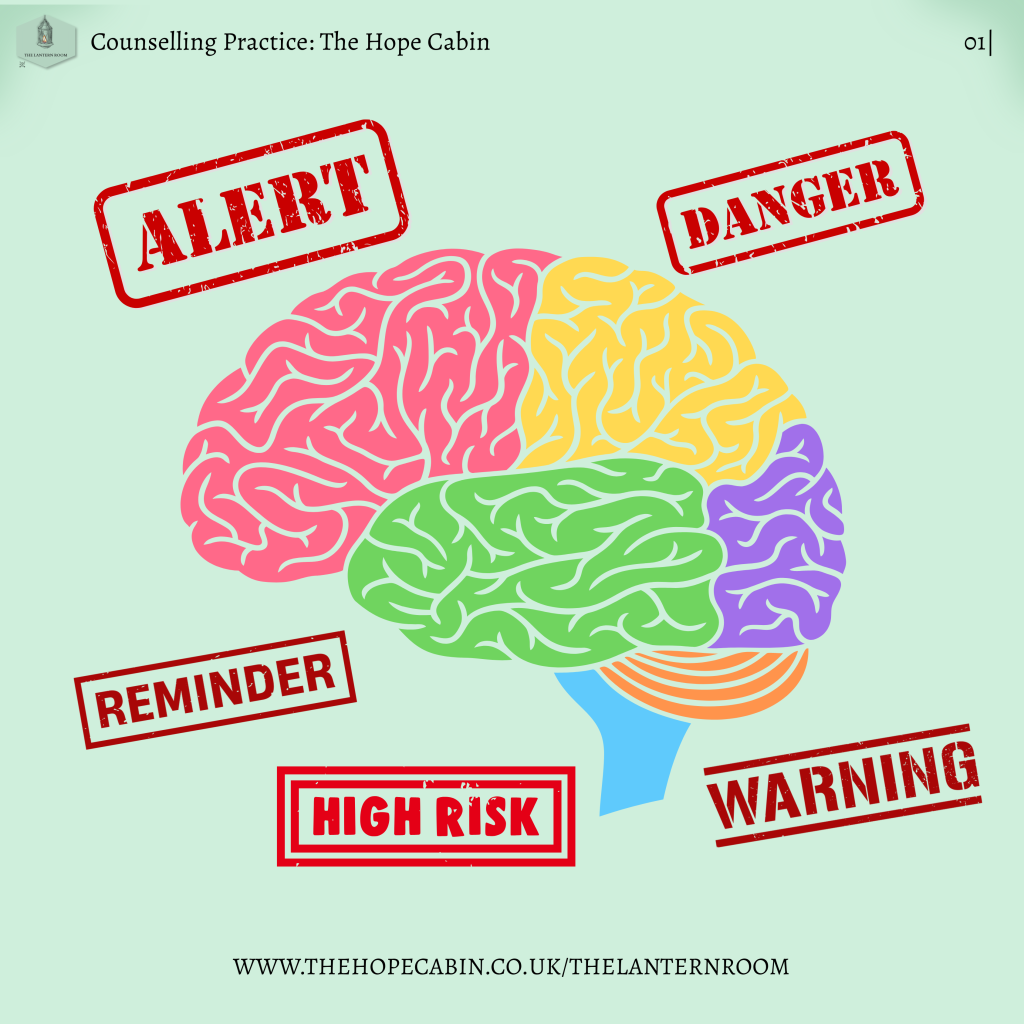
Sometimes we can understand something intellectually and still find ourselves reacting in a way that seems to happen before we have had a chance to think.
There is a reason for that.
Our brains are constantly processing information about what is happening around us. Some of that processing happens very quickly, before we have consciously made sense of what is happening.
The Amygdala is involved in detecting and processing emotionally significant information, including potential threat.
The Prefrontal Cortex is involved in things like attention, planning, decision making and regulating our responses.
When we feel threatened or overwhelmed, our brain can prioritise responding over carefully thinking something through. That can make it harder to access perspective, regulate our emotions and remind ourselves that 'this might be different now'.
These systems don't work separately. They are a part of a much larger, interconnected network.
Research into childhood adversity has shown association with differences in brain development and functioning, including areas involved in threat processing, emotion, regulation and memory. The findings are complex and vary according to the type, timing and nature of people's experiences.
So perhaps that helps explain why sometimes:
"I know I'm safe" and "I feel safe."
aren't quite the same thing.
Knowing something rationally doesn't always mean our nervous system has caught up with that knowledge in the moment.
This means sometimes looking back can be helpful. It can support our understanding of where some of our responses came from and remain curious about how we make meaning from them.
Why does this feel familiar?
What is my brain responding to?
Is this about what is happening now or am I responding something older being activated?
Conclusion- What is Inner-Child Work Really About?
I hope by reading this article, it has given you some insight into what it means in my professional practice.
For me, 'Inner-child work' is an umbrella term for exploring experiences that have shaped us, and reconnecting clients with the younger version of themselves who may have learned to adapt along the way.
The frameworks and tools we use to explore this may be different between each client because people don't always make sense of their experiences in the same way.
One person might hear “inner child” and immediately think:
Yes. That makes complete sense.
Another might hear it and think:
Absolutely not.
Neither response is wrong.
If a particular phrase gets in the way of someone engaging, then I'm looking to remove that barrier.
For me, adapting the language isn't about changing the work itself.
It can be about making space for the person sitting in front of me and supporting the client to find a way back to themselves.
In kindness,
Sarah
Further Reading and Research
A note about the following references.
"Inner-child work" is used as an umbrella term rather than one single, standardised therapeutic intervention.
The ideas explored in this article draw on a number of psychological theories, frameworks and areas of research.
The references below are included to show some of the research connected to those individual areas, rather than to suggest that 'inner child work' itself has one evidence base.
Adverse Childhood Experiences
Centers for Disease Control and Prevention (CDC). (2026). About Adverse Childhood Experiences (ACEs). National Center for Injury Prevention and Control.
Centers for Disease Control and Prevention (CDC). (2024). Risk and Protective Factors. National Center for Injury Prevention and Control.
Centers for Disease Control and Prevention (CDC). (2024). Preventing Adverse Childhood Experiences. National Center for Injury Prevention and Control.
Attachment
Fearon, R. M. P., & Roisman, G. I. (2017). Attachment theory: Progress and future directions. Current Opinion in Psychology, 15, 131–136. https://doi.org/10.1016/j.copsyc.2017.03.002
Adult attachment and mental health
Li, T., et al. (2022). The relationship between adult attachment and mental health: A meta-analysis. Journal of Personality and Social Psychology.
Schemas and childhood adversity
Pilkington, P. D., Bishop, A., & Younan, R. (2021). Adverse childhood experiences and early maladaptive schemas in adulthood: A systematic review and meta-analysis. Clinical Psychology & Psychotherapy, 28(3), 569–584. https://doi.org/10.1002/cpp.2533
Self-criticism
Rose, A. V., & Rimes, K. A. (2018). Self-criticism self-report measures: A systematic review. Psychology and Psychotherapy: Theory, Research and Practice, 91(4), 450–489. https://doi.org/10.1111/papt.12171
Self-compassion and self-criticism
Wakelin, K. E., Perman, G., & Simonds, L. M. (2022). Effectiveness of self-compassion-related interventions for reducing self-criticism: A systematic review and meta-analysis. Clinical Psychology & Psychotherapy, 29(1), 1–25. https://doi.org/10.1002/cpp.2586
Childhood adversity and the brain
McLaughlin, K. A., Weissman, D., & Bitrán, D. (2019). Childhood adversity and neural development: A systematic review. Annual Review of Developmental Psychology, 1, 277–312. https://doi.org/10.1146/annurev-devpsych-121318-084950
Hakamata, Y., Suzuki, Y., Kobashikawa, H., & Hori, H. (2022). Neurobiology of early life adversity: A systematic review of meta-analyses towards an integrative account of its neurobiological trajectories to mental disorders. Frontiers in Neuroendocrinology, 65, 100994. https://doi.org/10.1016/j.yfrne.2022.100994
Client preferences in psychotherapy
Swift, J. K., Callahan, J. L., Cooper, M., & Parkin, S. R. (2018). The impact of accommodating client preference in psychotherapy: A meta-analysis. Journal of Clinical Psychology, 74(11), 1924–1937. https://doi.org/10.1002/jclp.22680
© Sarah Sluman, The Hope Cabin- The Lantern Room. All rights reserved.
Thank you for taking the time to visit this space. The Lantern Room is a space for reflection, understanding and growth. This work has been shared in the hope it brings comfort, curiosity or understanding. If you would like to share this post, please do so by linking the original article. Please do not copy or reproduce without permission.