What is Emotional Therapeutic Counselling?
Before we begin...
There are many different counselling practices, each offers its own way of understanding human experience.
This article is not intended to be an official explanation of Emotional Therapeutic Counselling (ETC). Instead, it reflects my own understanding of the approach, shaped by my professional training, continued learning, lived experience and the philosophy that underpins my work at The Hope Cabin.
Like all good practice, my understanding continues to evolve.
I hope you find it helpful to read about about how I work with therapeutic counselling.
What is incongruence?
Sometimes we reach a point where we know something doesn't feel right, but we cannot always explain why.
Carl Rogers developed this concept to describe a mismatch between a person's true feelings, experience or sense of self vs the way they see themselves or the way they should be. This can lead to emotional distress, anxiety or a feeling of not being fully authentic.
We may feel overwhelmed by our emotions, find ourselves repeating patterns we don't understand, struggle in relationships, or feel disconnected from ourselves. We might wonder why certain situations affect us so deeply, or why we react in ways that feel difficult to control.
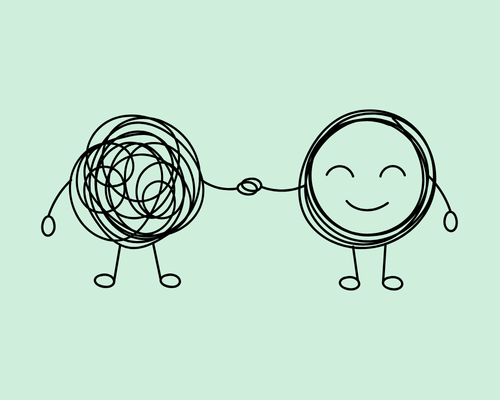
Emotional Therapeutic Counselling (ETC) offers a space to explore these experiences, helping us to understand ourselves, our emotions and the experiences that have shaped us.
Understanding emotions, rather than fighting them
Emotions are a natural and important part of being human. Yet many of us have learned to push difficult feelings away, minimise them, or believe that certain emotions are something to be fixed.
Sometimes, emotions that feel uncomfortable or overwhelming are carrying important information about our experiences, our needs and the ways we have learned to protect ourselves.
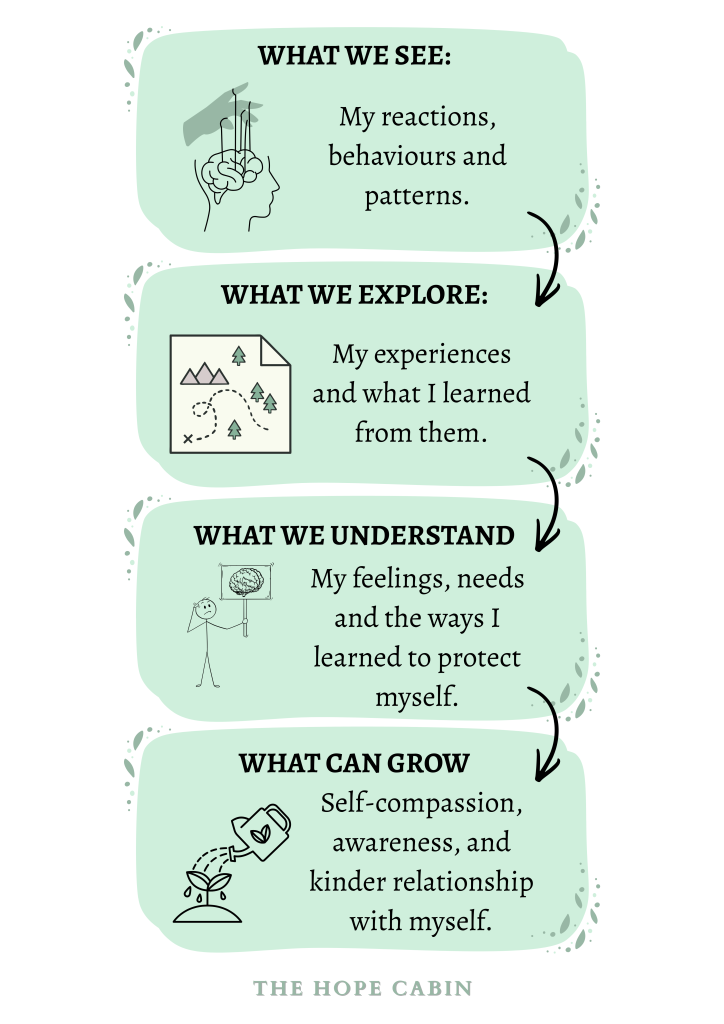
Emotional Therapeutic Counselling recognises that our feelings have meaning. Instead of only looking at what is happening on the surface, ETC explores what may be underneath.
Looking beneath the surface
Often, what is seen on the outside is not the whole story.
A person may experience anxiety, people pleasing, perfectionism, anger, withdrawing from others, or feeling constantly overwhelmed. these responses may have developed as ways of coping an protecting ourselves.
ETC explores those experiences, emotions and beliefs that may sit beneath these patterns.
The importance of early experiences
Our early experiences can influence the way we understand ourselves, relationships and the world around us.
When children experience consistent care, understanding and emotional support, they are more likely to develop a sense of safety and confidence in their emotions.
However, when emotional needs are not met, or when experiences are difficult, frightening or overwhelming, we may develop ways of coping that helped us at the time but may become challenging later in life.
ETC incorporates the understanding that these earlier experiences may continue to influence how we feel and respond as adults.
This is where inner child work can be helpful- not by focusing on blame or staying stuck in the past but by developing compassion for the younger parts of ourselves that may still carry unmet needs, fears or painful experiences.
The role of inner-child work (in brief)
Inner-child work is a way of exploring our early experiences in life. At it's heart it is about developing compassion and understanding for the younger parts of ourselves- the parts that may have experiences trauma, unmet needs or times when we had to adapt to survive and cope in the best way we knew how.
Not everyone identifies with the term 'Inner-child' and people may find a different way to describe this type of work more useful for them. Some good suggestions could be:
'Little me'
'Younger me'
'The younger version of me'
There is no right or wrong way to describe it.
It can be a meaningful way to understand patterns, emotions, and responses that continue into adult life. It is not about blaming the past (which can be a commonly found concern when exploring emotions connected to our childhood). Inner-child work is a way to support and understand how those experiences can show up in our adult lives and giving ourselves the opportunity to build a kinder relationship with our younger selves.
I will explore inner-child work in more depth in a future article.
A neuro-affirming approach
For many neurodivergent people, life can involve years of adapting to meet expectations that where never designed with them in mind. Over time, this can lead to masking, self-criticism, toxic shame, emotional exhaustion, or a feeling of being disconnected from who they truly are.
While every person's experience is unique, Emotional Therapeutic Counselling can offer a space to explore with curiosity and compassion and sessions take place with care and respect for people's capacity levels, communication preferences and individual needs.
To me, being neuro- affirming in practice is not about believing I have all the answers as the counsellor. It is about approaching each person with the willingness to learn.
No two people experience the world in the same way, and I recognise that true inclusion is an ongoing process rather than a final destination. I welcome feedback from clients about their experience at The Hope Cabin, as this helps me continue to learn, reflect and develop.
The therapeutic relationship
At the heart of Emotional Therapeutic Counselling is the relationship between counsellor and client.
Feeling truly heard, understood and accepted can be a powerful experience. A safe therapeutic relationship allows space to explore emotions that may have felt too difficult to acknowledge before.
The counsellor does not seek to judge, analyse or tell you who you should be. Instead they offer a compassionate space where you can begin to understand yourself at your own pace.
Creativity as a way of exploring
Sometimes words come easily, sometimes they don't.
Emotions and experiences are not always easy to describe, and this could be for many reasons.
Where appropriate, ETC offers the use of tools to support self exploration. These tools can be used as simply or as creative as you like. Creativity isn't about being artistic, but more another way of expressing, understanding and making sense of our inner world when words alone don't quite feel enough.
Is my approach right for everyone?
Different counselling approaches resonate with different people. ETC is an approach that places importance on emotional awareness and regulation, the therapeutic relationship, and understanding the experiences that have shaped us.
Counselling at The Hope Cabin is not about changing who you are, its about creating a space to understand yourself better, reconnecting you with your needs and growing into everything you already are.
Further Reading: Rogers, C.R (1961). On Becoming a Person: A Therapists View of Psychotherapy. Houghton Mifflin.
© Sarah Sluman, The Hope Cabin- The Lantern Room. All rights reserved.
Thank you for taking the time to visit this space. The Lantern Room is a space for reflection, understanding and growth. This work has been shared in the hope it brings comfort, curiosity or understanding. If you would like to share this post, please do so by linking the original article. Please do not copy or reproduce without permission.